
Graphic Designer Profile Tips to Win More Clients in 2026


Sofia is our design and templates voice, built from the knowledge of our production team, with over 20 years in printing.
Graphic Designer Profile Tips That Actually Get You Hired
A graphic designer profile stands out when it names a niche, shows 8 to 12 curated projects with the brief and the result attached, and holds one voice across every platform. Everything else is decoration. Clients scroll fast, recruiters skim faster, and a profile that does not say what you do, how well you do it, and why someone should pick you over the next designer is invisible. These graphic designer profile tips build one that stops the scroll and starts conversations.
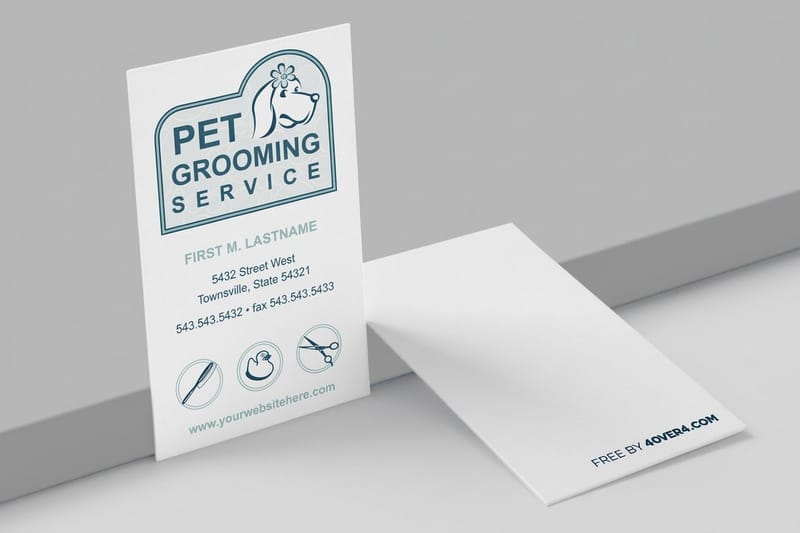
The profile also has a printed side. Many clients first meet you across a table or through the mail, so the headline on your screen belongs on paper too, with a QR code that opens the portfolio. Graphic designer business cards start at 100 cards on 14pt gloss cover, in a standard 2 x 3.5 inch or a square 2 x 2 inch size, and printed postcards in 4 x 6 inches give you the back of the card for one case study with its before and after.
A strong designer profile shows your thinking, your process and your results, where a software list shows only the tools. Set it with the same hierarchy, contrast and clarity you would give a client's business card, because a stranger decides in the headline whether to read on. The sections below take each part in the order a client meets it.
Copy this
The designer profile template, line by line
Paste it into a note, fill each line, and you have a profile draft in twenty minutes.
- Headline. I design [what] for [who].
- Bio, under 150 words. First person, the industries you have worked in, the results you delivered, one human detail.
- Proof line. One number a client can check: years working, projects shipped, or a measurable outcome from a named project.
- Portfolio, 8 to 12 pieces. Each with the brief, your process, and the outcome, and each proving a different skill or industry.
- Process shots. Sketches, mood boards, and at least one before and after pair.
- Print work. One printed piece photographed in the real world, so production knowledge is visible and not claimed.
- Services and how you work. What you take on, how a project starts, and your usual timeline.
- Testimonial. One quote from a client that names a result, not a compliment.
- Contact and next step. One link, one action, no form with nine fields.
- Consistency check. Same headshot, same two or three colors, same typeface on every platform you are listed on.
Writing the Profile for Each Platform You Are On
One voice across every platform does not mean one paragraph pasted five times. Each place has its own reader, its own first screen and its own search behavior, so the same positioning gets rewritten to fit.
Freelance marketplaces
Marketplaces surface you through a filtered search, so the first line has to carry the words a client types. Lead with the deliverable and the niche, keep the headline under a dozen words, and put the proof number in the first two sentences. Rates, availability and response time are ranking signals here rather than decoration.
Portfolio communities
Behance and Dribbble read the work before they read you, so the bio stays short and the project titles do the heavy lifting. Name the client or the industry in every title, because that is what the internal search indexes, and open each project with the brief rather than a hero image with no caption.
LinkedIn and your own site
LinkedIn is where a hiring manager checks whether you are real, so the headline names the role and the niche and the about section is written in first person. Your own site is the only place with no character limit and no competitor listed underneath you, which makes it the right home for long case studies. Point every other profile at it.
What Makes a Graphic Designer Profile Stand Out in 2026
A standout profile puts three things in the first screen: a headline that names what you design and for whom, 8 to 12 finished projects with the brief and the result attached, and one contact link. Give each project a short caption with the brief in one sentence, what you changed, and a result a client can check, such as a launch date you hit or a label that reached a retail shelf. 4OVER4.COM has printed more than 10 billion cards for businesses and creatives since 1999, so we see the other end of that profile too: the card or postcard a designer hands a client, which does its job when it carries the same headline and a link back to the portfolio. The profiles that book projects tell a story instead of listing credentials.
The design field is more crowded than it has ever been. Remote work opened the floodgates, which means your profile carries more weight than it did five years ago. Pretty pictures alone will not win the job. You need context, a point of view, and proof. Spend your first hour on the headline and the project captions, because a client reads those before any image.
Lead With a Clear Value Proposition
Skip the opening line about being a passionate graphic designer, because everyone writes that. Lead with what you actually do and who you do it for. A line like I design brand identities for food and beverage startups tells a client in one breath whether you are the right fit.
Specificity builds trust. When you narrow your focus you do not lose clients, you attract better ones. A restaurant owner hunting for menu design help will pick the designer who lives in hospitality over a generalist every single time.
Write a Bio That Sounds Like You
Your bio should read like a conversation, not a resume. Drop the third person corporate voice, use I and you, and talk straight to the person reading. Name the industries you have worked in, the results you delivered, and the projects that light you up.
Keep it under 150 words. Nobody reads a wall of text on a profile page. Hit the highlights, add one human detail like your love of vintage type or your side project illustrating dogs, and move on. That small touch is what makes you stick in memory.
Writing the Profile for Each Platform You Are On
One voice across every platform does not mean one paragraph pasted five times. Each place has its own reader, its own first screen and its own search behavior, so the same positioning gets rewritten to fit.
Freelance marketplaces
Marketplaces surface you through a filtered search, so the first line has to carry the words a client types. Lead with the deliverable and the niche, keep the headline under a dozen words, and put the proof number in the first two sentences. Rates, availability and response time are ranking signals here rather than decoration.
Portfolio communities
Behance and Dribbble read the work before they read you, so the bio stays short and the project titles do the heavy lifting. Name the client or the industry in every title, because that is what the internal search indexes, and open each project with the brief rather than a hero image with no caption.
LinkedIn and your own site
LinkedIn is where a hiring manager checks whether you are real, so the headline names the role and the niche and the about section is written in first person. Your own site is the only place with no character limit and no competitor listed underneath you, which makes it the right home for long case studies. Point every other profile at it.
Building a Portfolio That Does the Selling for You
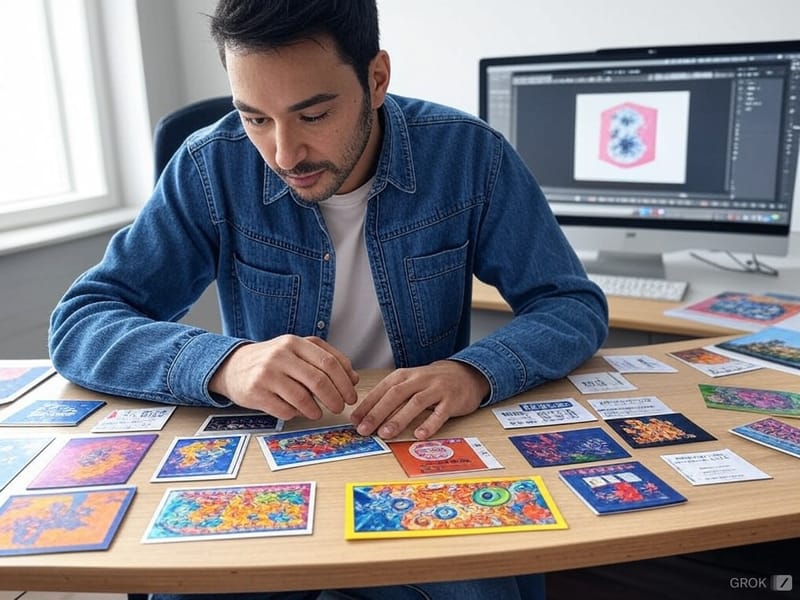
Your portfolio is the backbone of your designer profile. It is where a client decides whether your style matches their vision. Most designers trip on the same rock here, they show everything. Do not. Curate without mercy.
Show 8 to 12 of your strongest projects, each one proving a different skill or serving a different industry. Include the brief, your process, and the outcome. Did the rebrand lift foot traffic? Did the packaging win a shelf spot at a major retailer? Results make the work real. Browse graphic design portfolio examples to see how top designers structure their case studies.
Show Process, Not Just Final Deliverables
Clients want to see how you think, so include sketches, wireframes, mood boards, and iteration rounds. This proves you have a methodology and not just good taste. Process shots also make your portfolio far more interesting to scroll.
A before and after comparison lands hard. If you rebuilt a brand's whole visual identity, show the old version beside the new one. That contrast speaks louder than any caption you could write.
Include Print Work in Your Portfolio
Digital only portfolios leave opportunity on the table. Print work shows that you understand production constraints like bleeds, color profiles, paper stocks, and die lines. Those are the skills that separate a professional from a hobbyist.
Photograph your printed pieces in the real world. A business card on a desk, a banner at a trade show, a brochure in someone's hands. Physical context makes the work feel real and gives clients a sense of scale. Setting your files up with blank templates also signals that you know the technical side cold.
Writing the Profile for Each Platform You Are On
One voice across every platform does not mean one paragraph pasted five times. Each place has its own reader, its own first screen and its own search behavior, so the same positioning gets rewritten to fit.
Freelance marketplaces
Marketplaces surface you through a filtered search, so the first line has to carry the words a client types. Lead with the deliverable and the niche, keep the headline under a dozen words, and put the proof number in the first two sentences. Rates, availability and response time are ranking signals here rather than decoration.
Portfolio communities
Behance and Dribbble read the work before they read you, so the bio stays short and the project titles do the heavy lifting. Name the client or the industry in every title, because that is what the internal search indexes, and open each project with the brief rather than a hero image with no caption.
LinkedIn and your own site
LinkedIn is where a hiring manager checks whether you are real, so the headline names the role and the niche and the about section is written in first person. Your own site is the only place with no character limit and no competitor listed underneath you, which makes it the right home for long case studies. Point every other profile at it.
Filling a Portfolio When You Have No Clients Yet
The advice to show eight to twelve strong projects assumes you have twelve to choose from. If you do not, the answer is not to pad the page with school exercises. It is to go and make work a client could have commissioned.
- Redesign for a real business that needs it. Pick a local shop with a bad menu or a weak label, write the brief yourself, and solve the problem the business actually has.
- Take one unpaid job for a cause you care about, with a proper brief, a deadline and a named contact, so the process is real even when the invoice is not.
- Invent a product and brand it end to end. One full system, from mark to packaging to a printed piece, proves more than six unrelated logos.
- Print one of them. A file on a screen and a finished piece in a photograph are read completely differently.
Label spec work as spec work. Say the brief was self directed and what constraint you set, because a client who finds out later stops trusting the rest of the page. Nobody minds unpaid work in a portfolio. Everybody minds being misled about it.
Writing the Profile for Each Platform You Are On
One voice across every platform does not mean one paragraph pasted five times. Each place has its own reader, its own first screen and its own search behavior, so the same positioning gets rewritten to fit.
Freelance marketplaces
Marketplaces surface you through a filtered search, so the first line has to carry the words a client types. Lead with the deliverable and the niche, keep the headline under a dozen words, and put the proof number in the first two sentences. Rates, availability and response time are ranking signals here rather than decoration.
Portfolio communities
Behance and Dribbble read the work before they read you, so the bio stays short and the project titles do the heavy lifting. Name the client or the industry in every title, because that is what the internal search indexes, and open each project with the brief rather than a hero image with no caption.
LinkedIn and your own site
LinkedIn is where a hiring manager checks whether you are real, so the headline names the role and the niche and the about section is written in first person. Your own site is the only place with no character limit and no competitor listed underneath you, which makes it the right home for long case studies. Point every other profile at it.
Personal Branding: Your Profile Is a Design Project

Your profile is a design project, and it is the most important one you will ever take on. If your own branding is cluttered, inconsistent, or generic, why would a client trust you with theirs?
Consistent Visual Identity Across Platforms
Your profile photo, color palette, typography, and tone should hold steady whether someone finds you on Behance, LinkedIn, Dribbble, or your own site. This is not about being rigid. It is about being recognizable.
Pick 2 to 3 brand colors, choose a primary typeface, and use the same headshot everywhere. These small details read as professionalism, and they make you easier to remember when a client is weighing five designers across five browser tabs.
Use Your Own Work as Proof
Design your own business cards, letterhead, and social templates, then photograph them and fold them into your portfolio. It does double duty, showing your skills and proving you can build a cohesive brand system. For a look at how designers market themselves with branded materials, see these logo sticker design ideas.
Graphic designer profile summary examples
Reading a rule is easy, writing the paragraph is not. Here are three profile summaries written out in full, one per career situation. Each one leads with the niche, gives a number a client can check, and closes with the next step.
The freelancer
I design brand identities and packaging for independent food and drink brands. Over the last six years I have taken twenty three products from a name on a napkin to a label on a shelf, including four that moved into regional grocery chains. My work starts with a positioning session, not a mood board, because a label that looks beautiful and says the wrong thing still sits on the shelf. I build every file print ready, with bleeds, dielines, and a CMYK proof, so nothing gets rebuilt at the printer. Outside work I collect hand lettered fruit crate labels from the 1940s, which explains more about my type choices than any case study will. If you have a product launching in the next six months, send me the brief and I will tell you honestly whether I am the right designer for it.
The studio designer
I am a senior designer at a nine person studio, where I lead editorial and print systems for cultural clients. I have art directed thirty one publications, from a fourteen page museum guide to a three hundred page annual report, and I own the grid, the type system, and the press check on each one. My strongest work is the kind you do not notice: a page that reads at speed, a caption that sits where your eye already is. I work in InDesign every day, I speak to printers directly, and I have never missed a press date. I am open to freelance editorial work outside studio hours, usually one project at a time.
The career changer
I spent eleven years as a pastry chef before I moved into design, and I now design menus, packaging, and signage for restaurants and bakeries. That background is the whole reason to hire me: I know what a menu has to do at seven on a Friday night, how a laminated card survives a service, and why the dessert list belongs on its own page. My portfolio holds nine projects, six of them paid, three of them redesigns I did for kitchens I used to work in. I am fluent in Illustrator and InDesign, I set files up with proper bleed and safe margins, and I proof on the actual stock before a job runs. If you run a food business and your printed pieces are not pulling their weight, I would like to see them.
Printed Pieces That Carry Your Profile Offline
A client who met you at a mixer or a portfolio review goes home with whatever you handed over. Plan those pieces as part of the profile, with the same headline, colors and typeface, so the paper and the screen read as one designer.
A card that repeats your headline
Put your I design [what] for [who] line on the back of the card, not only your name and title, and add a QR code that opens your strongest case study rather than the home page. A square 2 x 2 inch card stands out in a stack of standard 2 x 3.5 inch cards, and choosing the stock yourself shows a client you know the difference between 14pt and 32pt before they ask.
A postcard mailer built from one case study
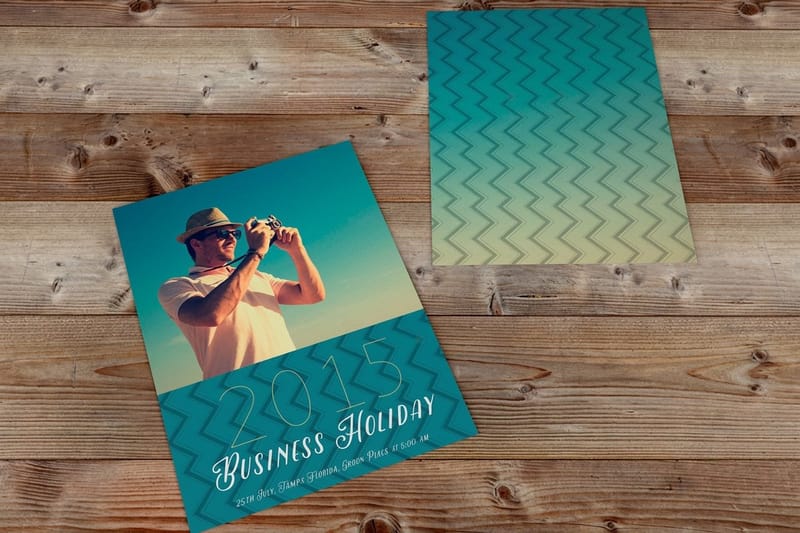
Pick the project closest to the clients you want next. Print the old version on the front and your redesign on the back, with two lines on the brief and the result, and mail a short run to local businesses in your niche. A restaurant owner who sees a menu redesign for a place down the street understands your offer faster than from any bio.
Stickers on the work you deliver
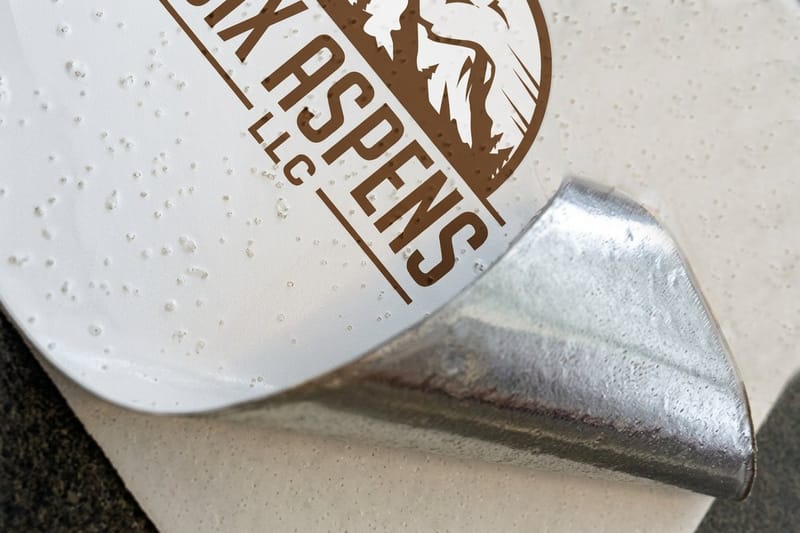
Seal the envelope of printed proofs or the box of finished brochures with a small logo sticker. The client opens your delivery in front of colleagues, and custom logo stickers, which start at a run of 25, put your name on that moment.
Print your portfolio
Signs that put your work in the room
Durable aluminum signs for studio branding, event booths, and market displays, priced by size and quantity.
| Quantity | Price Per Unit | Total |
|---|---|---|
| 1 | $36.00 | $36.00 |

Set up for print
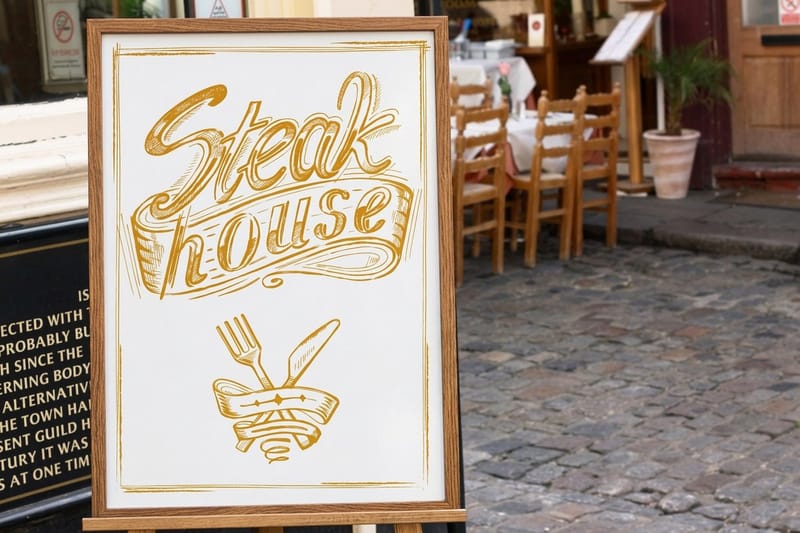
Print-ready blank templates
Exact-size blanks so your artwork lands inside the cut line and bleed, the detail that tells clients you know production.
Technical Skills Every Graphic Designer Profile Should Highlight
A line that reads Adobe Creative Suite tells a client nothing. Name each tool and the job you do in it, the way a printer names the stock and the finish on a quote, so the person reading can match your skills to their project.
Software Proficiency With Context
Instead of a generic skills bar, which tells nobody anything, describe what each tool does in your hands. I build brand identity systems in Illustrator, lay out multi page documents in InDesign, and composite product photography in Photoshop. That is useful. A bar that reads Photoshop 90% is noise.
If you lean on newer tools like Figma for collaborative design or Midjourney for concept exploration, say so. Staying current signals that you adapt, and quick turnaround projects are where that flexibility pays off.
Print Production Knowledge
Understanding print production is a real differentiator. Mention your experience with CMYK color management, Pantone spot colors, file prep for offset and digital printing, and paper stock selection. Clients who need physical materials, and most businesses still do, will favor designers who deliver print ready files without back and forth.
4OVER4.COM offers more than 60 paper types across its range. Knowing the gap between 14pt and 32pt stock, or when to reach for soft touch lamination over UV coating, makes you more valuable to any client ordering business cards, postcards, or packaging.
Typography and Layout Expertise
Typography is where good designers become great ones. Your profile should show that you understand type hierarchy, pairing, and readability across different media. Include at least two portfolio pieces where type is the star.
Layout skills matter just as much. Whether it is a magazine spread, a landing page, or a 2-sided blockout banner design, your ability to organize information visually is what clients are really paying for.
Panel specs
Aluminum sign panels, materials and sizes
Rigid stock, finish, and size options for wall mounted and freestanding displays that show your work.

Soft Skills That Clients Actually Care About
Design talent gets you the first call, and the way you run a project gets you the second. Your profile should show that you are easy to work with, reliable, and professional, without ever writing the phrase team player. Give a client facts to plan around: how soon you answer email, the day your weekly update goes out, how many revision rounds your fee covers, and how many business days a logo or a business card job usually takes you. If you hand off print work, say that your files arrive with bleed, CMYK color and a proof on the stock the client chose.
Communication and Collaboration
Spell out your process for client communication: whether you send weekly updates, which project management tool you share, and whether you present concepts with a rationale or as a bare option A and option B. Clients want to know what working with you feels like before they sign.
Add a testimonial or two that names your communication style. She kept us in the loop at every stage is worth more than great designs. For more on presenting creative work professionally, browse our printing articles library.
Time Management and Reliability
4OVER4.COM delivers with 99.8% on-time delivery because reliability matters in every link of the creative supply chain. Your profile should carry the same promise. If you consistently hit deadlines, say so. If you have handled rush projects, name the turnaround.
Concrete beats vague. I delivered a complete rebrand package in 10 business days is specific and memorable. I always meet deadlines is forgettable.
Adaptability and Trend Awareness
Design trends turn over every few seasons. Your profile should show that you stay current without chasing every fad. Mention the conferences you attend, the courses you finish, or the publications you follow. It signals that you are invested in growth.
Look at how advertising has evolved over the decades. These funny print ad examples show how creative thinking adapts across eras while staying effective.
Optimizing Your Profile for Discovery
A profile books work only when a client finds it. Clients reach you through a platform search or through a link someone passed along, often printed on a card, so plan the words for the search and the address for the card.
Keywords and Search That Work
Most portfolio platforms have search built in. Use specific terms in your project titles and descriptions. Instead of Logo Design, write Logo Design for Craft Brewery Startup. Instead of Branding Project, write Complete Visual Identity for Wellness Brand.
Those specific descriptions help you surface in filtered searches, and they hand clients instant context about your experience in their industry.
Case Studies Over Galleries
A gallery of images gets scrolled past. A case study gets read. For your top 3 to 5 projects, write a short case study, the challenge, your approach, the solution, and the results. That format shows strategic thinking, which is what separates a 50 dollar an hour designer from a 150 dollar an hour designer.
Seasonal and promotional work makes strong case studies too, because it shows how you handle a creative brief with both artistry and commercial awareness.
Social Proof and Testimonials
Nothing builds credibility faster than other people vouching for you. Include 3 to 5 client testimonials on your profile. Ask clients to be specific about the project, the result, and what it was like to work with you.
If you have worked with recognizable brands, feature their logos with permission. Small businesses count too. A wall of 10 to 15 past clients instantly reads as experience. You can also mock up client work with the Online Designer to build polished presentation images.
Common Mistakes That Weaken Your Designer Profile
Four mistakes undo a good profile faster than weak work: too many projects, no context, old pieces, and a site that breaks on a phone. Check yours against each one before you send the link to a client.
Showing Too Much Work
More is not better. If your portfolio holds 50 projects, a client does not know where to look, so they leave. Edit down to your best 8 to 12 pieces. Quality always beats quantity.
No Context for Projects
A pretty image with no explanation is a missed chance. Every project needs at minimum the client or industry, the brief, and what you delivered. Without context, clients cannot judge whether your experience fits their needs.
Outdated Work
If your most recent project is from 2022, that is a red flag. Keep your portfolio current. Retire anything older than two to three years unless it is a landmark piece, and refresh every quarter with new work and current testimonials.
Ignoring the Mobile Experience
Most people meet your profile on a phone first. If your portfolio site is not mobile responsive, you lose clients before they see the work. Test on several devices, and make sure images load fast and text reads without zooming. Prepare print ready files with blank templates so every portfolio piece is production perfect, which reflects the attention to detail clients notice.
Wally helps your profile do the selling
Clear niche, curated work, real proof
A great designer profile is a design project in its own right. Lead with a specific niche, curate 8 to 12 of your strongest projects with real context, and show process alongside the polish. Add print work to prove you know production, keep your branding consistent everywhere, and let client results speak. 4OVER4.COM prints the physical pieces that make your portfolio feel real.
Try the Online Designer →What makes a designer profile land clients
Clients hire on clarity, proof, and professionalism, and each tip above adds one of them. Run the list each quarter when you refresh the portfolio, and reprint your cards the same week if the headline changed, so the paper and the profile still match.
What sets exceptional designers apart
- Creative conceptualization. A portfolio that shows range and inventive layouts proves you solve problems, not just decorate.
- Technical expertise. Fluency in Adobe Creative Suite and modern tools keeps you efficient and versatile.
- Attention to detail. Color harmony, alignment, and consistency keep every deliverable on brand.
- Understanding of branding. Aligning visuals with brand tone builds recognition that lasts.
Soft skills that keep you booked
- Strong communication. Collaborating closely with clients keeps the creative vision on track.
- Time management. Hitting deadlines matters most when print orders are time sensitive.
- Adaptability. Staying current with trends keeps your work contemporary and engaging.
- Problem solving. Spotting and resolving snags in the process adds real value.
Explore more
More ways to build and market your design work
Every related page on 4OVER4.COM, one card each, so you can keep exploring the tools and print products designers use.
 Article Graphic Design Portfolio Examples How top designers structure their case studies.
  Article Logo Sticker Design Ideas Branded materials that market you and your studio.
  Article Funny Print Ad Examples Creative thinking that adapts across eras.
  Product Custom Aluminum Signs Durable signage for studios and events.
  Product Aluminum A-Frames Portable double sided displays for markets.
  Product Aluminum Sign Panels Rigid panels for wall and freestanding displays.
  Product 2-Sided Blockout Banners Opaque banners that read sharp from both sides.
  Tool Online Designer Mock up polished presentation images fast.
  Tool Free QR Code Generator Link printed pieces back to your online profile.
  Hub Blank Templates Exact-size, print-ready files for every product.
  Library All Printing Articles Tips and how-tos across every print product.
 Put your profile on paper
Sharpen your niche, curate your best work, and print the physical pieces that prove you know production, from business cards to durable signage.
Your Questions About Building a Better Designer Profile
What should a designer profile picture look like?
A real photograph of your face, well lit, looking at the camera, cropped close enough that you are recognizable as a thumbnail. Avoid a logo, an illustration of yourself or a group shot, because a client is deciding whether there is a person on the other end. Use the same image everywhere. Clients often check two or three profiles before they write, and a different face on each one slows that down.
Should a designer profile show rates?
It depends where the profile lives. On a freelance marketplace a rate is expected and leaving it blank costs you views, so publish a number you are happy to start a conversation from. On your own site and on portfolio communities a starting figure works better than an hourly one, phrased as projects starting from, because it filters out the enquiries you do not want without capping the ones you do.
Do I need a personal website if I have a Behance profile?
A portfolio community is enough to get found and not enough to close. It ranks well and it brings traffic, and it also puts four competitors underneath your work and controls how your case studies are laid out. A site of your own carries the long case studies, your contact terms and anything a platform would not let you say. Keep both and point every profile at the site.
What should a graphic designer profile include?
Nine parts, in this order: a headline that names what you design and who for, a bio under 150 words in first person, one checkable proof point, 8 to 12 portfolio pieces each with the brief and the outcome, process shots including a before and after, at least one printed piece photographed in the real world, a short list of what you take on and how a project starts, one client quote that names a result, and a single contact link with one clear next step. Keep the headshot, the palette, and the typeface identical everywhere you are listed.
What are the best practices for a graphic designer profile?
Start with a specific value proposition that names your niche. Curate your portfolio to 8 to 12 strong projects with case study context. Show process shots alongside final deliverables, keep your visual branding consistent across every platform, and add client testimonials that mention real results. A free QR code generator lets you link physical portfolio pieces back to your online profile.
How do I choose the right profile approach for my career stage?
If you are starting out, focus on building 8 to 12 solid pieces, and personal or spec projects count. Mid career designers should lead with case studies and measurable results. Senior designers should highlight specialization and thought leadership. Every stage benefits from print production knowledge, so consider showcasing work on physical media like Aluminum Sign Panels for event displays.
What makes a designer profile effective for marketing yourself?
An effective profile answers what clients actually search for, proof of relevant experience, a clear communication style, and professional reliability. Profiles built with industry specific keywords, detailed project descriptions, and social proof get found more often. 4OVER4.COM has served more than 150,000 businesses, and the designers who win those projects present themselves with the same precision they bring to client work.
How much should I budget for profile and portfolio materials?
Your core profile on Behance or Dribbble is free. A custom portfolio site runs 10 to 30 dollars a month for hosting. Budget 100 to 300 dollars a year for printed portfolio pieces like business cards, leave behinds, and sample prints. A professional headshot at 150 to 400 dollars is worth it. For studio branding and event displays, Custom Aluminum Signs work well.
